LibraryPoint Blog

Keep up-to-date with the latest news about the Central Rappahannock Regional Library.
01/30/2013 - 5:17pm
Remembering George Van Sant

George Van Sant was well known in the area for his outstanding public service in the Marine Corps, at Mary Washington College, and in local politics.  To many of us, however, he was best known as an advocate for the Central Rappahannock Regional Library.

01/30/2013 - 4:32am
When the Emperor Was Divine by Julie Otsuka

In When the Emperor Was Divine, Julie Otsuka uses a sparse, lyrical writing style to illuminate the psychological effects of one of the most shameful episodes in U.S. history. The novel opens with a portrait of an ordinary woman going about her daily chores in Berkeley, California. While en route to her local library, she sees something troubling: Evacuation Order No. 19. After reading the notice, she abandons her errands and begins preparing for life in an unfamiliar locale.

At first, the sequence of events feels dystopian or apocalyptic – the world is ending and a family is forced to prepare to face the unknown. But this narrative is a dramatization of history, not a speculative tale of the future. After the attack on Pearl Harbor, the U.S. government began to suspect that American citizens of Japanese ancestry might harbor allegiance to Japan. In 1942, these paranoid fantasies lead to the forcible internment of Japanese-Americans announced in Evacuation Order No. 19.  

01/29/2013 - 12:18pm
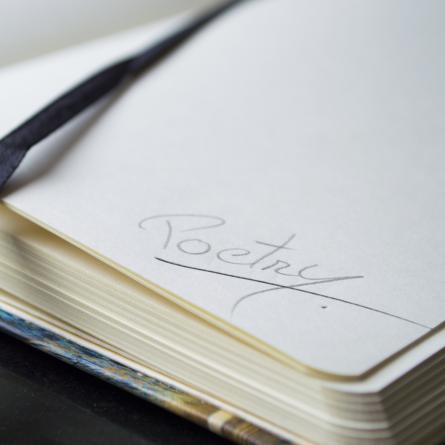
Put Your Poems in Someone's Pocket

Put your poems in someone’s pocket

If you’re an aspiring poet
We would sure like to know it
Send us your poem
You can do it from home
There’s no reason not to do it

Okay, I can see that my own poetry needs a little work. I’ll work on polishing it up. Meanwhile, we’re asking for some of your poems for Poem in Your Pocket Day ! In past years we’ve reprinted published poems (with permission), rolled them up into pocket sized scrolls and distributed them in the libraries.

This year we’d like to add some original poems by our patrons to this project. Submit as many of your original poems as you like via this online form, or via old-fashioned paper & ink at the research desk of any of our branches. We’ll select some to print & distribute in the form of beribboned scrolls in April (National Poetry Month.)

01/29/2013 - 4:31am
Ashes by Ilsa J. Bick

Seventeen-year-old Alex has had a rough time lately in Ashes by Ilsa J. Bick. First her parents tragically pass away in a helicopter accident, and then she is diagnosed with a brain tumor, which she dubs “the monster.” Fed up with managing the monster and all of its side effects like losing her sense of smell, she escapes to a campsite for a few days to think about her options. And then the whole world is turned upside down by an electromagnetic pulse that leaves much of the population dead or changed into flesh-eating zombies.

01/28/2013 - 2:31pm
Virginia Breast Cancer Foundation Grant

The library has new books on breast cancer, thanks to a grant from the Virginia Breast Cancer Foundation.  The VBCF, founded in 1991, is a nonprofit organization “committed to the eradication of breast cancer through education and advocacy.”  For more information, visit their website at www.vbcf.org, or call 800-345-VBCF.

Check out a few of our new titles:

Betty Crocker Living with Cancer Cookbook by Betty Crocker
Over 130 recipes designed specifically for the cancer patient.  Also includes “uplifting quotes, anecdotes, and practical tips from cancer survivors.”  (catalog summary)

Breast Cancer:  What You Need to Know--Now
A concise but comprehensive guide from the American Cancer Society.

01/28/2013 - 7:18am
The Founding Foodies: How Washington, Jefferson, and Franklin Revolutionized Ame

The Founding Foodies, by Dave DeWitt, is an easy-going chat on matters historic and gastronomic in the Old Dominion and beyond. DeWitt dismisses some food writers’ contentions that colonial food was poor stuff.  Having attended Mr. Jefferson’s university and being thus familiar with the third president’s many accomplishments, he knew that this common opinion was surely an overgeneralization.  Jefferson, as well as Washington and Franklin, were trend-setters—learned men who easily absorbed and promulgated cultured styles of fashion, philosophy, architecture, and, yes, food, derived European trends, especially their French allies.

Besides these Founding Fathers’ culinary preferences, DeWitt also looks at curious historical periods of Virginia history where food, or lack of same, played a noteworthy role.  At Jamestown, the horrors of spoiled ships’ rations and the colonists’ inexperience with hunting and fishing made them very dependent on the native tribes’ shared knowledge. They did learn to hunt and fish which was well since the supply ship was delayed, nearly resulting in John Smith being hanged.  Desperate to turn a profit in the days before tobacco, the settlers took up fishing on a grand scale—thousands of pounds of salted cod to England and dried fish to Spain.

01/28/2013 - 4:30am
Cleopatra: A Biography by Duane W. Roller

The University of Mary Washington's 2013 Chappell Great Lives Lecture Series continues on Tuesday, January 29, with a lecture on Cleopatra by Duane W. Roller author of Cleopatra: A Biography:

Few personalities from classical antiquity are more famous-yet more poorly understood-than Cleopatra VII, queen of Egypt. In the centuries since her death in 30 BC, she has been endlessly portrayed in the arts and popular culture, from Shakespearean tragedy to paintings, opera, and movies. Despite the queen's enduring celebrity, however, many have dismissed her as a mere seductress. In this major new biography, Duane Roller reveals that Cleopatra was in fact a learned and visionary leader whose overarching goal was always the preservation of her dynasty and kingdom. Roller's authoritative account is the first to be based solely on primary materials from the Greco-Roman period: literary sources, Egyptian documents (Cleopatra's own writings), and representations in art and coinage produced while she was alive. His compelling portrait of the queen illuminates her prowess as a royal administrator who managed a large and diverse kingdom extending from Asia Minor to the interior of Egypt, as a naval commander who led her own fleet in battle, and as a scholar and supporter of the arts. Even her love affairs with Julius Caesar and Marcus Antonius-the source of her reputation as a supreme seductress who drove men to their doom-were carefully crafted state policies: she chose these partners to insure the procreation of successors who would be worthy of her distinguished dynasty.

Find out more about this lecture on Mary Washington's web site.

All lectures in the university's Great Lives series are held at 7:30pm, in Dodd Auditorium, George Washington Hall, and are free and open to the public.

01/25/2013 - 6:29pm
Organizational Apps Popplet

If one of your New Year's resolutions was to finally get organized, you may be starting to feel frustrated with your progress and thinking of giving up until next year. If that's the case, here are some free organizational apps to help fight your case of Resolution Fatigue. A more organized you may be just a click away.

TeuxDeux

01/30/2013 - 4:54pm
Shoot for the Stars

On January 11, 2013 CRRL Headquarters had the pleasure of welcoming the Rappahannock Astronomy Club to Fabulous Friday: Shoot for the Stars. Mr. Jerry Hubbell, President of RAC, and Mrs. Linda Billard, the editor of RAC’s newsletter, came and talked to a group of thirty-two parents and children. The focus of the program was constellations and how we can see shapes in the stars the same way we see shapes in the clouds.  After Mr. Hubbell talked about some of the better known constellations, he and Mrs.

01/23/2013 - 8:57pm
Julius Caesar by Philip Freeman

The University of Mary Washington's 2013 Chappell Great Lives Lecture Series begins Thursday, January 24, 7:30pm, with a lecture on Julius Caesar by Philip Freeman, author of Julius Caesar:

More than two thousand years after his death, Julius Caesar remains one of the great figures of history. He shaped Rome for generations, and his name became a synonym for "emperor" -- not only in Rome but as far away as Germany and Russia. He is best known as the general who defeated the Gauls and doubled the size of Rome's territories. But, as Philip Freeman describes in this fascinating new biography, Caesar was also a brilliant orator, an accomplished writer, a skilled politician, and much more. Julius Caesar was a complex man, both hero and villain. 

Find out more about this lecture on Mary Washington's web site.

All lectures in the university's Great Lives series are held in Dodd Auditorium in George Washington Hall, and are free and open to the public.